An Instrument That Ships Empty — With a Million Sounds Inside
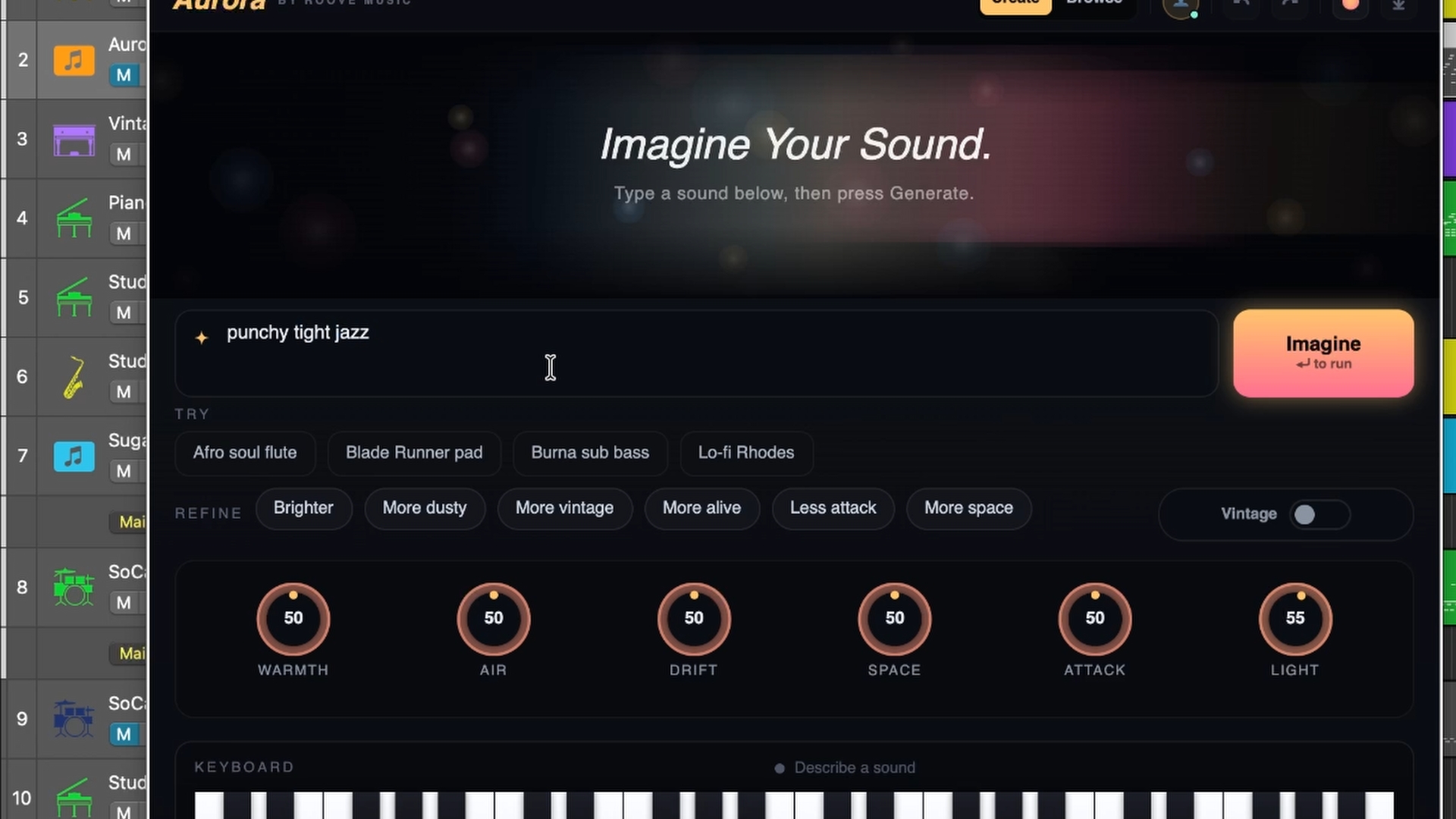
Open almost any software instrument for the first time and the first thing you meet is a list. A factory library. A few hundred presets someone else made, sorted into folders — Basses, Pads, Keys, Leads — each one named something like "Lead 47."
That list is supposed to be the value. Look how much comes in the box.
Aurora ships empty.
Not because there's nothing in it. Because it was built on the opposite idea: the sound shouldn't come from a list someone else wrote. It should come from you — from a plain-language description of the thing you're already hearing in your head.
A preset is a finished answer. A description is a question.
Here's the difference that changes everything.
A preset is a fixed point. Someone made a decision, froze it, and shipped it. You get exactly what they decided — and so does everyone else who scrolls to the same one. Your job becomes searching: click through the library until something is close enough, then bend it toward your idea and hope.
A description is open. You say what you want — warm, intimate upright piano, soft on the hammers — and Aurora builds a playable instrument around that. It's not retrieving a file. It's responding to your intent.
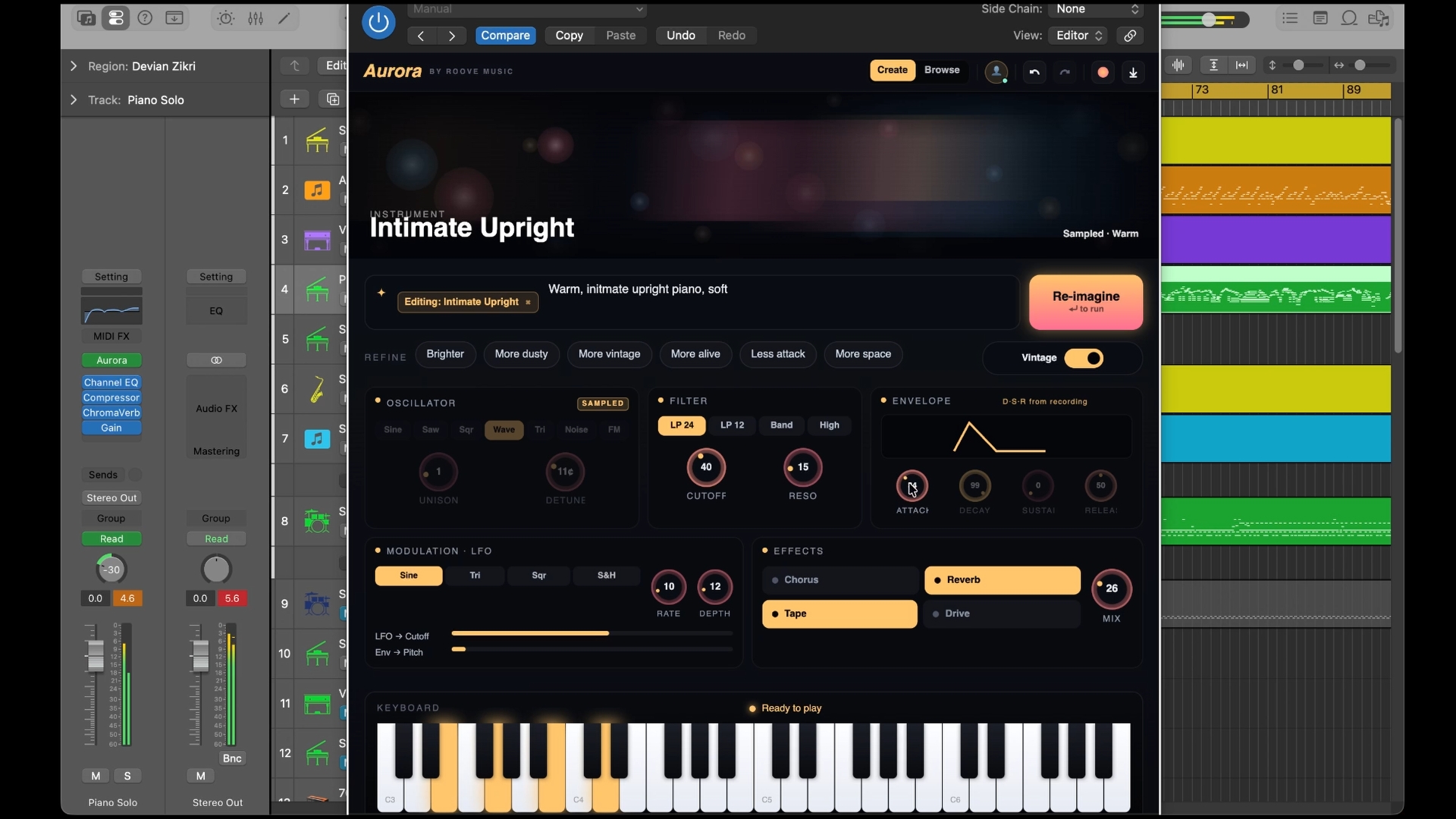 The Aurora plugin showing an intimate upright piano built from a plain-language description, with vintage character and effects controls.
Because it starts from your words instead of a fixed list, the space of what it can become isn't a few hundred patches. It's every sound you can put into a sentence. That's what "ships empty" actually means: not empty of sound — empty of someone else's decisions.
"Empty" is the feature, not the compromise
It sounds like a downside. No browser full of ready-made sounds to reassure you on day one. But think about what the full library actually costs you:
- It anchors you. The first preset that's "good enough" quietly becomes your idea, instead of the idea you walked in with.
- It's shared. A popular factory patch shows up on thousands of tracks. The library that comes free with your tools is, by definition, the least distinctive place to start.
- It ages. A fixed library is only ever as good as the day it shipped.
An empty instrument has none of those problems. There's no "everyone else's favorite" to fall into. You start from the sound you can hear, not the sound that happened to be at the top of the folder.
You still shape it — that's the point
Describing a sound isn't a slot machine where you take whatever falls out. The first result is a starting point, not a verdict.
Say the bass you described lands a little too clean. You don't start over — you nudge it. More vintage. Less attack. A little more space. You're not searching anymore; you're sculpting, chasing the sound until it's unmistakably yours.
That's the loop an empty instrument makes possible: describe → play → refine → play. No library in the middle. Just you and the sound, closing the gap.
Why it matters
The instruments that come loaded are optimized to look full. Aurora is optimized to become yours. One is a catalog of finished answers. The other is a blank space that turns into whatever you can describe — and then lets you carve it the rest of the way.
An instrument that ships empty is really an instrument with no ceiling. The only limit is how clearly you can say what you hear.
---
Aurora turns a plain-language description into a playable instrument, right inside your DAW. Try it free — or read about why so much new music sounds the same, and the way out.
Want to hear it for yourself?
Aurora turns a plain-language description into a playable instrument. Try describing a sound — there's a free trial.
Try Aurora