Taste Is the Last Thing They Can't Automate
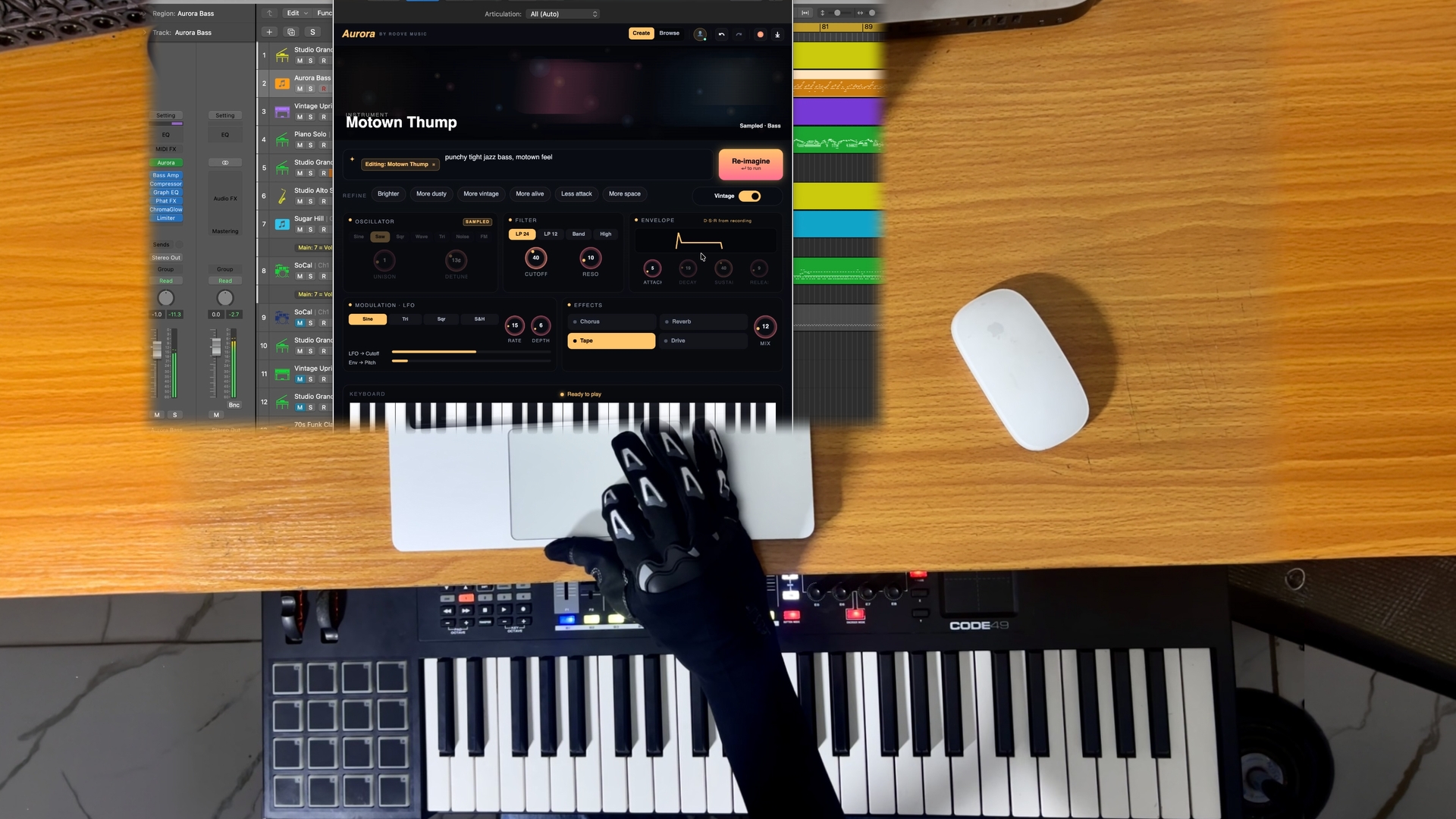
Here's a thought experiment. Imagine a machine that can generate a thousand sounds every second — every bass, pad, and lead you could dream of, and a million you couldn't. Infinite raw material, instantly.
Does that make you a better producer?
No. Because the hard part of music was never making sounds. It was knowing which one is good. And that — the knowing — is the one thing no machine can do for you.
Speed moves the bottleneck; it doesn't remove it
Every leap in music technology has done the same thing: it made some part of the process faster, and in doing so, it revealed that the real bottleneck was somewhere else all along.
Samplers made any sound available instantly — and suddenly the skill wasn't playing the sound, it was choosing and arranging it. DAWs made recording effortless — and the bottleneck moved to ideas, because now anyone could record, but not everyone had something worth recording.
As the tools get faster, the scarce thing keeps shifting. And it always shifts in the same direction: away from execution, toward judgment. Away from "can you make it," toward "do you know if it's any good."
We're at the far end of that trend now. Making sound is becoming free. Which means the entire game is about to rest on the thing that was never free: taste.
What taste actually is
Taste gets talked about like it's mystical. It isn't. Taste is just a large, well-organized memory of what has moved you, combined with the honesty to notice when something doesn't.
It's knowing that the bass is almost right but sits a hair too clean. It's hearing thirty options and feeling, in your body, that the fourth one is the one. It's the restraint to leave space, and the nerve to keep the weird choice.
None of that is a pattern a model can hand you, because it isn't a pattern at all — it's yours. It's built out of a specific life: the records that wrecked you, the shows you stood through, the ten thousand small reactions you've had to sound. A machine has had none of those. It can imitate the statistics of a good song. It has never once wanted one.
Why this is the best news you've had in years
If you've been anxious about tools getting more powerful, flip it around.
When making sound was hard, technical skill was the moat — and technical skill can be copied, taught, and now, automated. But as execution gets cheap, the value doesn't vanish. It relocates to the one thing that can't be copied off you: your judgment.
That means the reps you put into building taste — really listening, developing opinions, learning what you think is good — are about to be the most valuable investment in your whole practice. Not the least.
So aim your energy at the part that lasts
Here's the practical takeaway. If a tool can delete the busywork — the searching, the tweaking, the friction — that's not a threat to your skill. It's a gift of time, and the smart move is to pour that time into taste.
This is the bet Aurora makes. It takes the labor of finding a sound off your plate — you describe what you want and play it — specifically so that all your attention lands on the decision that matters.
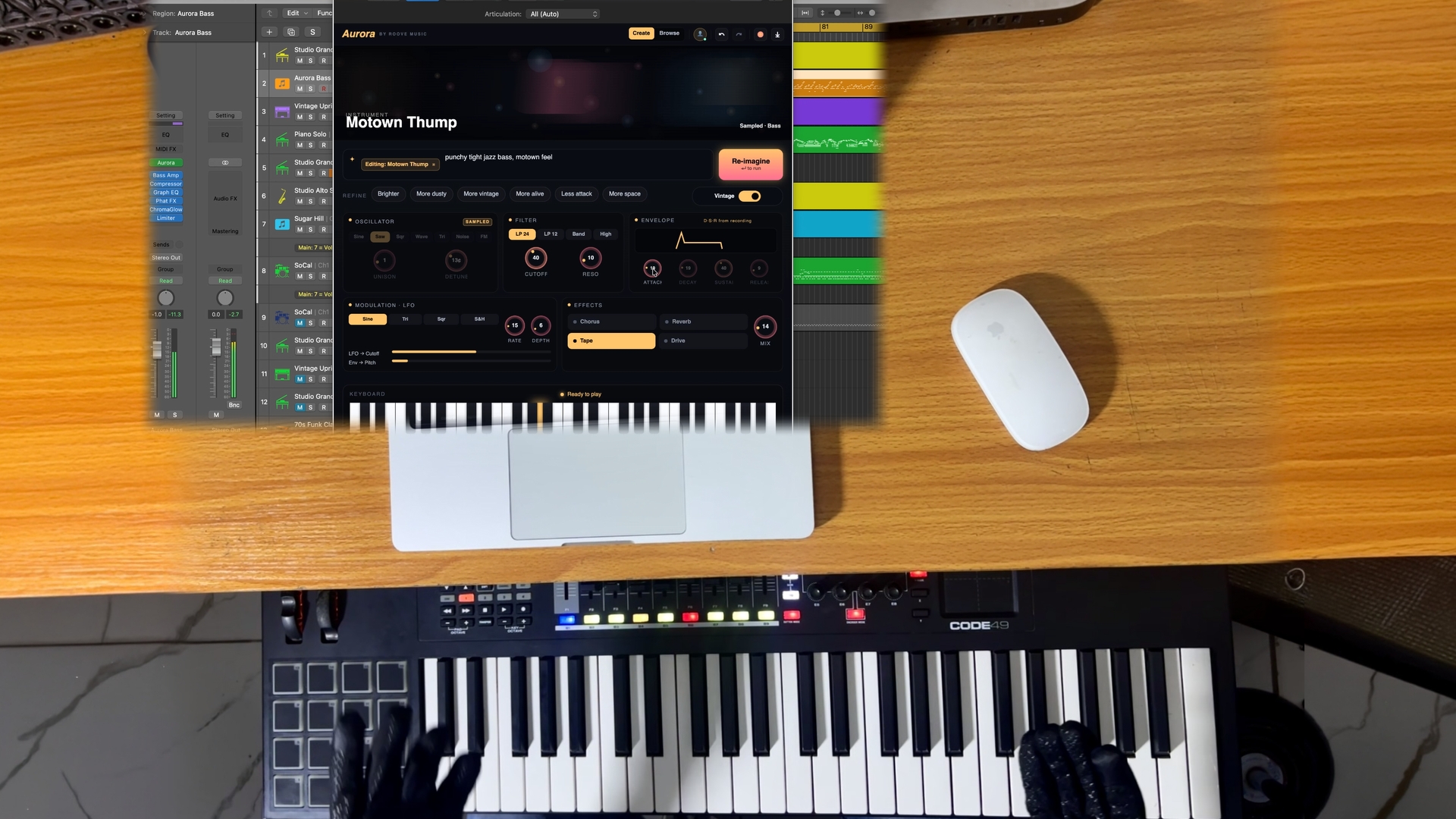 The Aurora plugin, where the producer's only real job is deciding which sound is right.
Describe the bass, play it, and now you're doing the only irreplaceable work in the room: listening, and deciding whether it's good. Too clean? You'd know. You'd nudge it. That instinct — that's the moat.
The machines are going to flood the world with sound that's technically fine and completely forgettable. The people who thrive won't be the ones who can make the most of it. They'll be the ones who can tell what's worth keeping.
Build that. It's the last thing they can't automate.
---
Aurora hands you the sound so you can spend your time on the part that matters — the judgment. Try it free, or read why so much new music sounds the same.
Want to hear it for yourself?
Aurora turns a plain-language description into a playable instrument. Try describing a sound — there's a free trial.
Try Aurora